
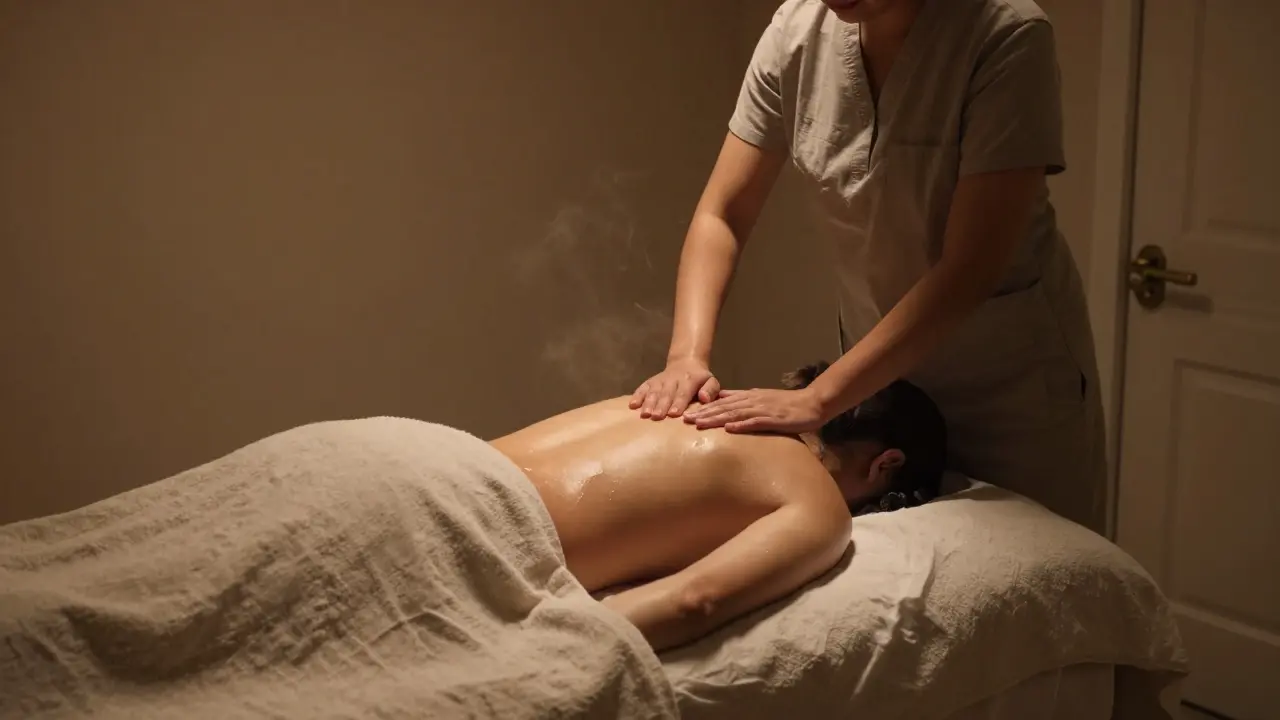
You’ve had a long day. Flights delayed, meetings running late, the desert heat clinging to your skin. You just want to calm down. Not just rest-really unwind. That’s where a massage center in Dubai comes in. Not the flashy, overpriced tourist traps. The real ones. The ones where the lights are low, the oil is warm, and for the first time in weeks, your shoulders stop screaming.
Key Takeaways
- Dubai’s top massage centers focus on authentic relaxation, not just luxury branding.
- Traditional Thai, Swedish, and Ayurvedic techniques are widely available and highly skilled.
- Most centers offer private rooms, aromatherapy, and heated tables-no shared spaces.
- Prices range from AED 150 to AED 600 depending on duration and technique.
- Booking in advance is essential, especially in Jumeirah, Downtown, and Al Barsha.
What You’ll Actually Experience
Forget the Hollywood version of a massage. In Dubai, the best centers don’t use glittery candles or ambient whale songs. They use quiet. Real quiet. The kind where you hear your own breath slow down. The therapist doesn’t chat. They don’t ask if you’re "feeling okay." They just work. With hands that know where tension hides-between your shoulder blades, under your jaw, along your spine.
I’ve been to places where the massage felt like a sales pitch. Here, it’s a reset. A 60-minute session isn’t about ticking boxes. It’s about letting go. The heat from the table seeps into your muscles. The scent of lavender or sandalwood lingers without being overwhelming. Your phone? Left in the locker. No notifications. No pressure. Just you, the oil, and the silence.
Why Massage Centers in Dubai Are Different
Dubai doesn’t just import massages. It refines them. You won’t find a single center that uses the same template. One might specialize in Thai stretching-deep, rhythmic, almost yoga-like. Another might blend Emirati herbal wraps with Swedish strokes. There’s even a place in Al Quoz that uses heated stones from the Himalayas, brought in weekly.
What sets these places apart? Training. Most therapists have 3+ years of certification from Thailand, India, or Europe. They don’t just know pressure points-they know how stress lives in the body. A client who comes in with chronic neck pain? They’ll trace it back to posture from sitting at a desk all day, then adjust the session accordingly.
Types of Massages Available
Here’s what you can actually find in Dubai’s top centers:
- Swedish Massage - Gentle, flowing strokes. Perfect if you’re new to massage or just want to melt into the table.
- Deep Tissue - Targets knots and chronic tension. Ideal for runners, office workers, or anyone who carries stress in their back.
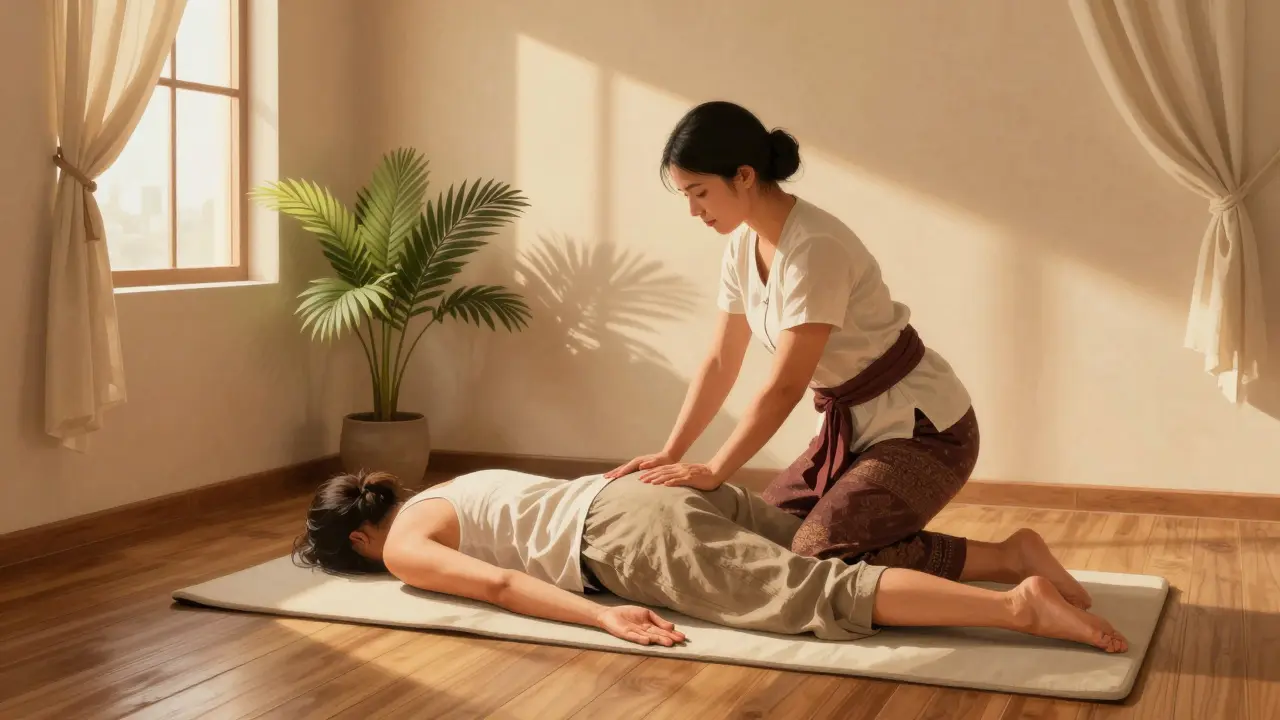
- Thai Massage - You stay dressed. The therapist uses their hands, knees, and feet to stretch and press. It’s intense but leaves you feeling like you’ve been reset.
- Ayurvedic - Uses warm herbal oils and rhythmic movements based on ancient Indian medicine. Often includes a scalp massage that feels like a warm hug for your mind.
- Hot Stone - Smooth, heated basalt stones glide over your skin. The heat penetrates deeper than hands alone.
- Arabic Hammam - A full-body scrub, steam, and oil massage. Not just relaxation-it’s a ritual.
Where to Find the Best Massage Centers
You don’t need to go to a five-star hotel. Some of the most peaceful spots are tucked into quiet corners:
- Jumeirah Beach - Quiet, ocean-view rooms. Great for post-beach recovery.
- Downtown Dubai - Near Burj Khalifa. Fast service, no waiting. Ideal for lunchtime breaks.
- Al Barsha - Less touristy. Local favorites here. Prices are 20-30% lower than in tourist zones.
- Al Quoz - Industrial area turned wellness hub. Hidden gems. Book ahead.
- Deira - Traditional Arabic-style centers. Authentic, no frills, deeply calming.
Pro tip: Skip the ones with huge neon signs. The quietest places often have no sign at all-just a small door with a bell.
What to Expect During Your Session
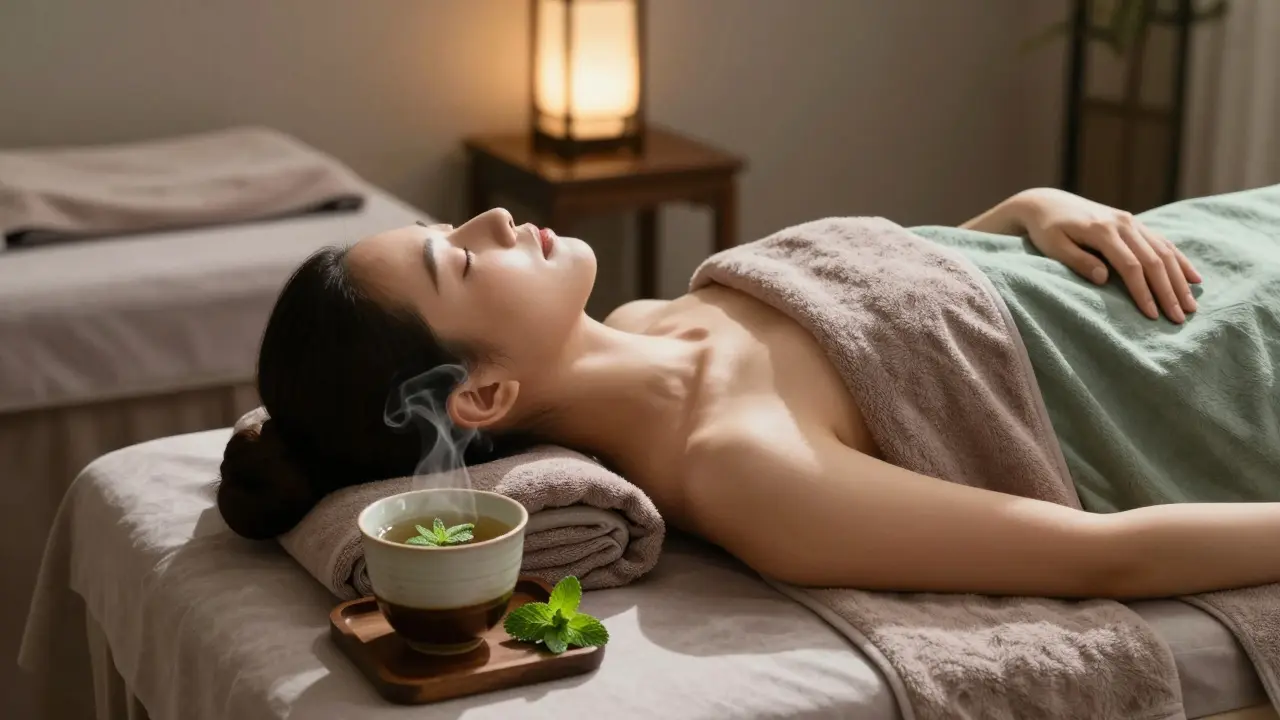
When you walk in, you’ll be offered tea-usually mint or chamomile. You’ll change into a robe and be led to a private room. The therapist will ask if you have any injuries or areas of focus. Then they’ll leave you alone to get comfortable under the covers.
The massage starts with light strokes. No sudden pressure. They’ll check in with a gentle hand on your shoulder-no words. After 10 minutes, you’ll feel your body sink. The oil warms. Your breathing drops. That’s when the deeper work begins.
Most sessions last 60 or 90 minutes. You’ll be offered water afterward. No rush. You can stay in the relaxation lounge with a warm towel on your neck. Some centers even offer a 15-minute nap room. Yes, really.
Pricing and Booking
Here’s what you’ll typically pay in 2026:
- 60-minute Swedish: AED 180-250
- 60-minute Deep Tissue: AED 220-300
- 90-minute Thai or Ayurvedic: AED 350-500
- 120-minute Hammam + Massage: AED 550-600
Most centers offer first-time discounts-around 15-20%. Book online. Walk-ins are rare, especially on weekends. Use Google Maps. Look for centers with 4.7+ ratings and at least 100 reviews. Avoid ones with mostly 5-star reviews and no photos. Real people post messy, honest feedback.
Safety and What to Avoid
Dubai has strict regulations for massage centers. Always check:
- Is the center licensed? (Ask for the Dubai Tourism license number)
- Are therapists certified? (They should have a certificate from Thailand, India, or a recognized EU body)
- Do they use clean, disposable linens? (No reused towels)
- Is the room private? (No shared spaces)
Avoid places that offer "special services" or use phrases like "ultimate relaxation package" with no details. Real centers don’t need to hype it. They let the experience speak.
Massage Center Dubai vs. Hotel Spa
| Feature | Independent Massage Center | Hotel Spa (e.g., Burj Al Arab, Atlantis) |
|---|---|---|
| Price (60 min) | AED 180-300 | AED 400-700 |
| Therapist Experience | Often 5+ years, specialized training | 3-5 years, general spa training |
| Privacy | Private rooms only | Shared relaxation areas common |
| Atmosphere | Quiet, no music, no sales pitches | Luxury decor, ambient music, upsells |
| Booking Flexibility | Same-day slots available | Weeks in advance for weekends |
| Authenticity | Techniques rooted in tradition | Modified for tourist appeal |
Frequently Asked Questions
Are massage centers in Dubai safe for tourists?
Yes, absolutely. Dubai has strict licensing rules. All registered massage centers must display their Dubai Tourism license number. Therapists are trained and vetted. Avoid places that don’t show credentials or have vague websites. Stick to centers with clear addresses, real reviews, and professional photos.
Do I need to tip at massage centers in Dubai?
Tipping isn’t expected, but it’s appreciated. Most people leave AED 20-50 if they loved the service. Some centers include a service charge-check the bill. If it says "10% service included," you don’t need to tip. If not, a small tip is a kind gesture.
Can I get a massage if I’m pregnant?
Yes, but only at centers that offer prenatal massage. Not all do. Ask specifically for a therapist trained in pregnancy techniques. Avoid deep pressure on the abdomen and lower back. Most centers will ask for a doctor’s note if you’re in your third trimester. It’s standard practice.
How long should I wait after eating before a massage?
Wait at least 90 minutes after a heavy meal. A light snack is fine-something like yogurt or fruit. A full stomach can make you feel nauseous during deep pressure work. Most centers will ask you this when you book. If they don’t, ask.
What should I wear to a massage in Dubai?
You’ll be given a robe and disposable underwear. You don’t need to bring anything. For Thai massage, you’ll keep your clothes on-loose, comfortable pants and a tank top work best. For Swedish or hot stone, you’ll be covered with sheets. Privacy is guaranteed. No one will see you undressed.
Ready to Unwind?
Massage isn’t a luxury in Dubai. It’s a necessity. In a city that never sleeps, finding a quiet place to just be-without noise, without pressure, without judgment-is priceless. You don’t need to spend AED 1,000 to feel better. You just need to find the right room, lie down, and let your body remember how to relax.
Book your session. Turn off your phone. Breathe.

Colin Napier
The article nails it-Dubai’s real massage spots don’t need neon signs or whale songs. I’ve been to three places in Jumeirah and Downtown, and only one had the quiet you actually need: no music, no chatty therapists, just heat, oil, and stillness. The Thai place on Al Sufouh Road? 90-minute session felt like my spine reassembled itself. No upsells. No ‘would you like to upgrade?’ Just silence and skilled hands. That’s the gold standard.
Jodie Rae Plaut
As someone who’s done 40+ sessions across 12 countries, I can confirm: Dubai’s independent centers outperform hotel spas on therapeutic efficacy. Why? Because they’re staffed by therapists with 3-5 years of specialized certification-often from Chiang Mai or Kerala-not spa trainees who do 2 weeks of online modules. The deep tissue work here targets fascial adhesions, not just ‘tension.’ Also, Ayurvedic oils are cold-pressed, not diluted with mineral oil like in tourist zones. If you’re serious about recovery, skip the Burj Al Arab and go to Al Quoz. The Himalayan stone therapist there? She’s a legend.
Patsy Ferreira
Correction: The article says ‘AED 150 to AED 600’-that’s misleading. A 60-minute Swedish is AED 180 minimum. And ‘heated tables’? Every legit center uses them. But the real issue? The ‘Arabic Hammam’ section is wrong. True hammam is a full ritual-scrub, steam, oil, rinse, rest. It’s not ‘a massage.’ It’s a 2-hour cultural experience. Also, ‘no shared spaces’? That’s false. Some Al Barsha centers have gender-segregated lounges. And you can’t just ‘book online’-many require WhatsApp confirmation. Stop oversimplifying.
William Terry
You dont need to spend 600 aed to feel better you just need to find the right room and lie down and let your body remember how to relax i mean come on thats the whole point of this right why are we overcomplicating it with certifications and oils and heated tables its just about breathing and being still you know what i mean
Gordon Kahl
So let me get this straight-we’re celebrating a place where the only sound is your breath and the therapist doesn’t say ‘how are you feeling?’ Like that’s some revolutionary act? In a city where everything’s a performance, the only thing that feels authentic is… silence? Wow. I’m shocked. Next you’ll tell me the desert doesn’t have Wi-Fi. But hey, if you’re into ‘no music’ and ‘no sales pitch’… maybe you’re just tired of capitalism. Or maybe you just need a nap.
Laura Fox
While the article presents a compelling narrative, it fails to address the systemic commodification of wellness in postcolonial urban centers. The so-called ‘authentic’ Thai and Ayurvedic techniques are, in fact, diasporic adaptations filtered through capitalist consumerism. The very notion of ‘privacy’ as a selling point reinforces neoliberal isolation. Furthermore, the emphasis on ‘no music’ is a performative anti-consumerist gesture that ignores the cultural context of healing rituals, which in many traditions involve chanting, instruments, or communal sound. This article romanticizes disconnection as liberation, when true healing requires reconnection-with community, with history, with embodied presence beyond the individual.
Emily Cross
Okay but the article says ‘AED 150–600’ then lists 180–250 for Swedish. That’s a 20% discrepancy. And ‘hot stones from the Himalayas’? Seriously? Basalt is volcanic rock. Himalayan stones are granite. That’s geologically inaccurate. Also, ‘no shared spaces’? I’ve been to two places in Al Barsha where the relaxation lounge had three people in it. One was napping, one was scrolling, one was crying. So… not private. And the ‘doctor’s note for pregnancy’? Only if you’re third trimester. First and second? No. The article got it wrong. And ‘no tip expected’? Wrong. 30% of locals tip 10%. It’s cultural. Not optional. This feels like a PR piece dressed as advice.
Ashok kumar
Oh my GOD this is the most profound thing I’ve read all year. I was in Dubai last month, exhausted, broken, soul-dead-and I walked into a tiny place in Deira with no sign, just a bell. The therapist didn’t speak. She didn’t smile. She just… held me. With her hands. With her presence. I cried. Not because it hurt. But because I remembered what it felt like to be held without condition. No phone. No noise. No judgment. Just warmth. And silence. And for the first time in five years-I slept. Not napped. Slept. Deep. Real. Soul-deep. I’ve told five friends. I’ve written to my therapist. I’ve changed my life. This isn’t a massage. It’s resurrection.
Amal Benkirane
I just wanted to say thank you for writing this. I’m from India, and I’ve been to places in Kerala and Jaipur that felt the same way. It’s rare to see someone describe this kind of quiet healing without turning it into a checklist. I’ve been to Dubai twice, and the last time I went to a center in Al Quoz, I felt like I’d come home. No one rushed me. No one asked for a review. Just tea, warmth, and stillness. It’s not about the price. It’s about the space. And you made me feel seen.
Kelly O'Leary
As someone who’s lived in three continents, I appreciate how this piece avoids the usual tourist traps. Dubai’s best massage centers don’t market themselves-they just exist. Quiet. Consistent. Skilled. I’ve had sessions in Ireland, the US, and here-and only in Dubai did I feel the therapist truly *listen* with their hands. No ego. No agenda. Just presence. I always leave with my posture better, my breath deeper, and my heart lighter. No fancy labels needed. Just good hands and quiet rooms. That’s all.