
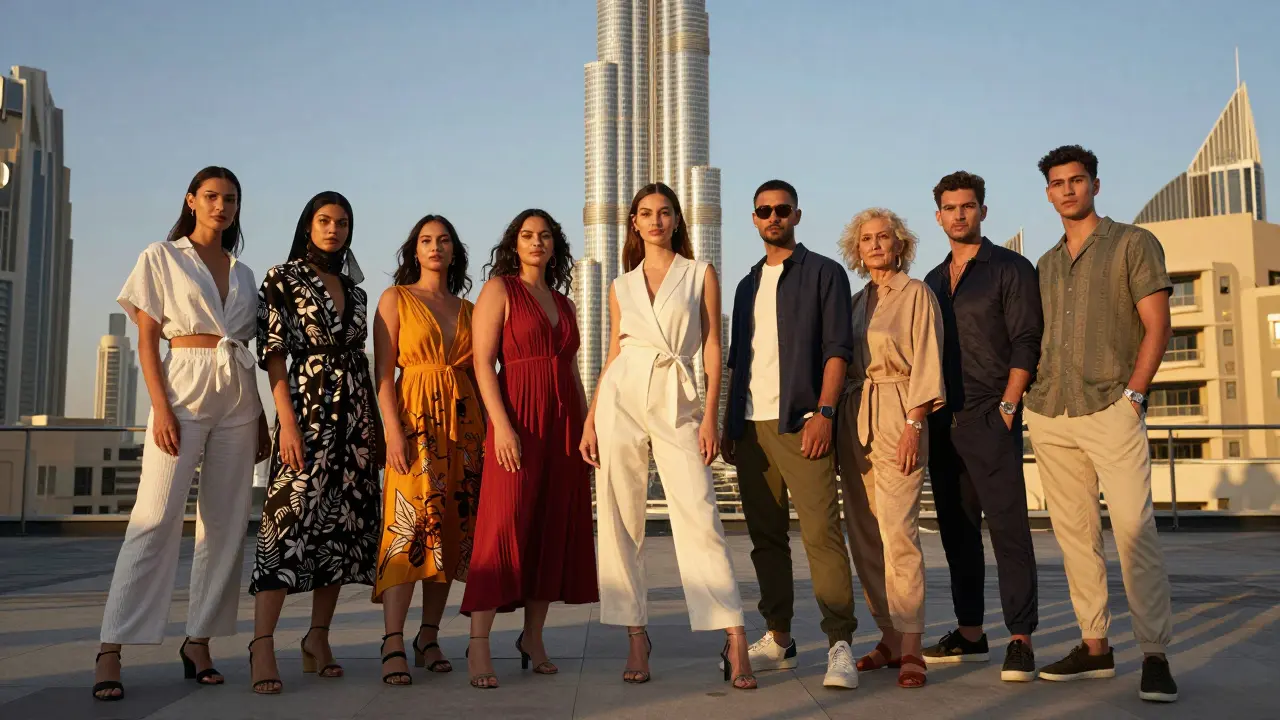
You’ve seen them on billboards in Downtown Dubai, walking the runway at Dubai Fashion Week, or posing against the Burj Khalifa at golden hour. They’re the faces behind global campaigns - but how do they get there? And what’s really happening behind the scenes at a model agency Dubai today?
Let’s cut through the glitz. This isn’t just about pretty faces and designer clothes. It’s about strategy, diversity, tech, and a whole new way of doing business in fashion. If you’re thinking about modeling in Dubai - or just curious how the industry works - here’s what you need to know.
What a Model Agency in Dubai Actually Does
A model agency in Dubai isn’t just a talent scout. It’s a full-service business that handles everything from casting to contracts, logistics to branding. Think of it like a hybrid between a talent manager, a PR firm, and a logistics coordinator - all wrapped into one.
Most agencies here don’t just sign models and hope for the best. They train them. They build their social media presence. They negotiate rates with brands like L’Oréal, Zara, or local luxury labels. They even arrange flights, visas, and accommodation for international jobs.
And yes - they take a cut. Usually between 15% and 25% of earnings. But here’s the thing: if you’re new, that cut buys you access to clients you’d never reach on your own. A good agency opens doors. A bad one just takes your money.
Why Dubai Is a Powerhouse for Modeling
Dubai isn’t just a city. It’s a global fashion crossroads. You’ve got brands from Europe, Asia, and the U.S. all racing to tap into the Gulf market. And Dubai’s location? Perfect. It’s a 6-hour flight from London, a 4-hour flight from Mumbai, and a 7-hour flight from Sydney.
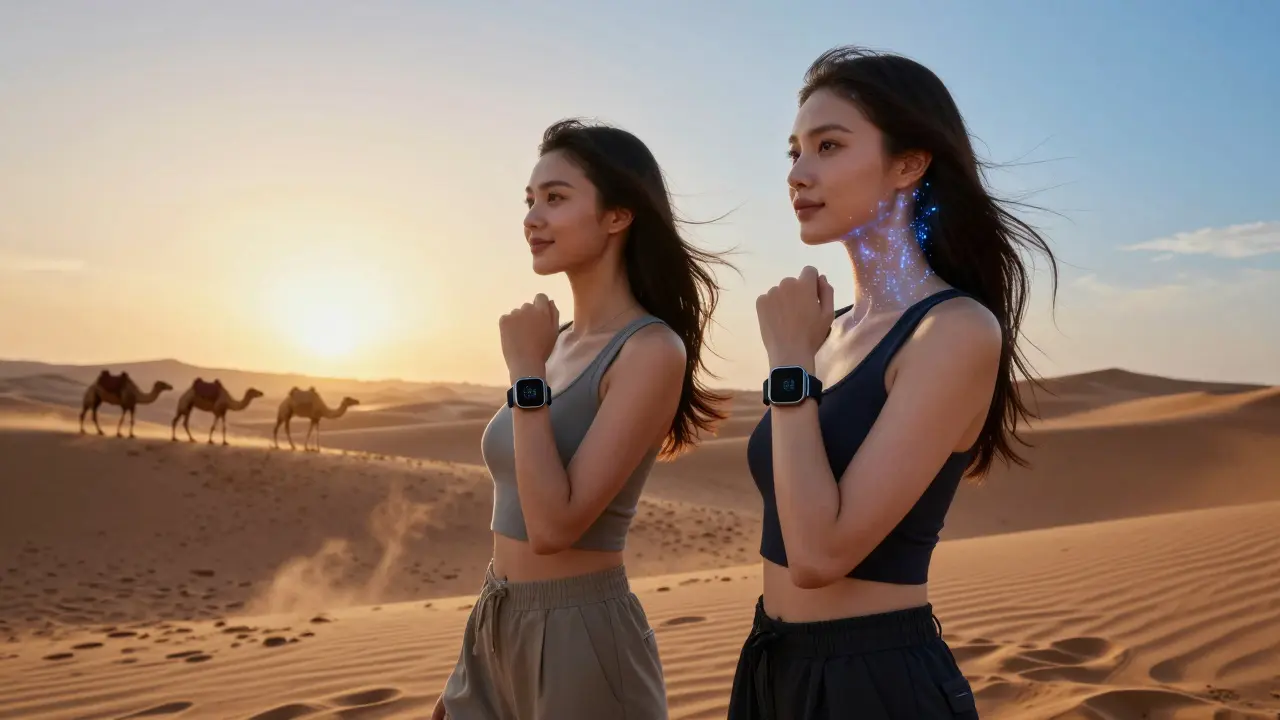
Plus, the city’s image - luxury, innovation, ambition - makes it a magnet for high-end campaigns. You’ll find models here working for everything from Emirati bridal labels to global tech startups. One model I know shot a campaign for a smartwatch brand next to a camel in the desert. That’s not something you’d see in Paris or Milan.
The market is growing fast. According to industry reports, the UAE’s fashion modeling sector grew by over 22% between 2022 and 2025. More brands are launching local collections. More influencers are turning pro. And more young people are seeing modeling as a real career - not just a side hustle.
Types of Models You’ll Find in Dubai
Not all models are the same. And Dubai’s market is split into clear categories:
- Runway Models - Tall, lean, with strong walk. Usually 178-185 cm for women, 185-195 cm for men. These are the ones you see at Dubai Fashion Week.
- Commercial Models - More relatable. Average height. Diverse body types. They appear in ads for banks, airlines, and beauty brands.
- Plus-Size Models - Growing fast. Brands like Noon.com and L’Occitane now regularly use size 12-18 models in their campaigns.
- Maternity & Aging Models - Still rare, but rising. Agencies are starting to sign women over 40 and pregnant models for ethical fashion lines.
- Male Models - In demand. Not just for menswear. They’re now front-and-center in skincare, fragrances, and even home appliance ads.
- Child Models - Heavily regulated. Agencies need special permits. Most work for local kids’ fashion brands.
The old rule - “only tall, thin, and young” - is dead here. Dubai’s market is one of the most inclusive in the region.
How to Get Signed by a Model Agency in Dubai
If you’re serious about this, here’s how to do it right:
- Build a basic portfolio - 5-8 high-quality photos. Natural lighting. No filters. Include full-body, headshot, and a candid shot. Hire a local photographer - don’t use your phone.
- Get social - Instagram is non-negotiable. Post consistently. Use hashtags like #DubaiModel, #UAEModelSearch. Tag local brands.
- Research agencies - Don’t just apply to the biggest names. Look at agencies like IMG Models Dubai, Models1, and local players like The Model Hub and Dubai Models Collective. Check their client lists.
- Attend open calls - Most agencies hold them monthly. No appointment needed. Just show up with your portfolio and ID.
- Don’t pay upfront - Legit agencies never charge you to join. If they ask for “training fees” or “portfolio packages,” walk away.
It’s competitive. But not impossible. Last year, over 400 new models were signed across Dubai’s top 10 agencies. Many of them were locals with no prior experience.
What Happens After You’re Signed
Signing isn’t the finish line - it’s the starting line.
First, you’ll get a contract. Read it. Understand the commission, duration, and exclusivity clauses. Some agencies require you to work only with them. Others let you freelance.
You’ll be assigned a scout or manager. They’ll send you casting calls. You’ll get emails like: “UAE Airline needs 2 female models for in-flight ads. Height 175cm. Deadline: 48 hours.”
Then comes the shoot. Sometimes it’s in a studio in Al Quoz. Sometimes it’s on the beach at Jumeirah. Sometimes it’s in the desert outside Al Ain. You’ll get styled. You’ll be coached on posing. You’ll be told how to look “effortlessly confident.”
And then? You wait. And you hustle. Most models do 2-3 jobs a month. Top ones do 10+. It’s not glamorous every day. But it’s real.
The Future Is Tech-Driven
Here’s the wild part: the future of modeling in Dubai isn’t just about real people anymore.
Virtual models are rising. Take “Lil Miquela” - a CGI influencer with 2M followers. She’s not real. But brands pay her just like a human model. Dubai agencies are already hiring digital artists to create custom virtual models for local campaigns.
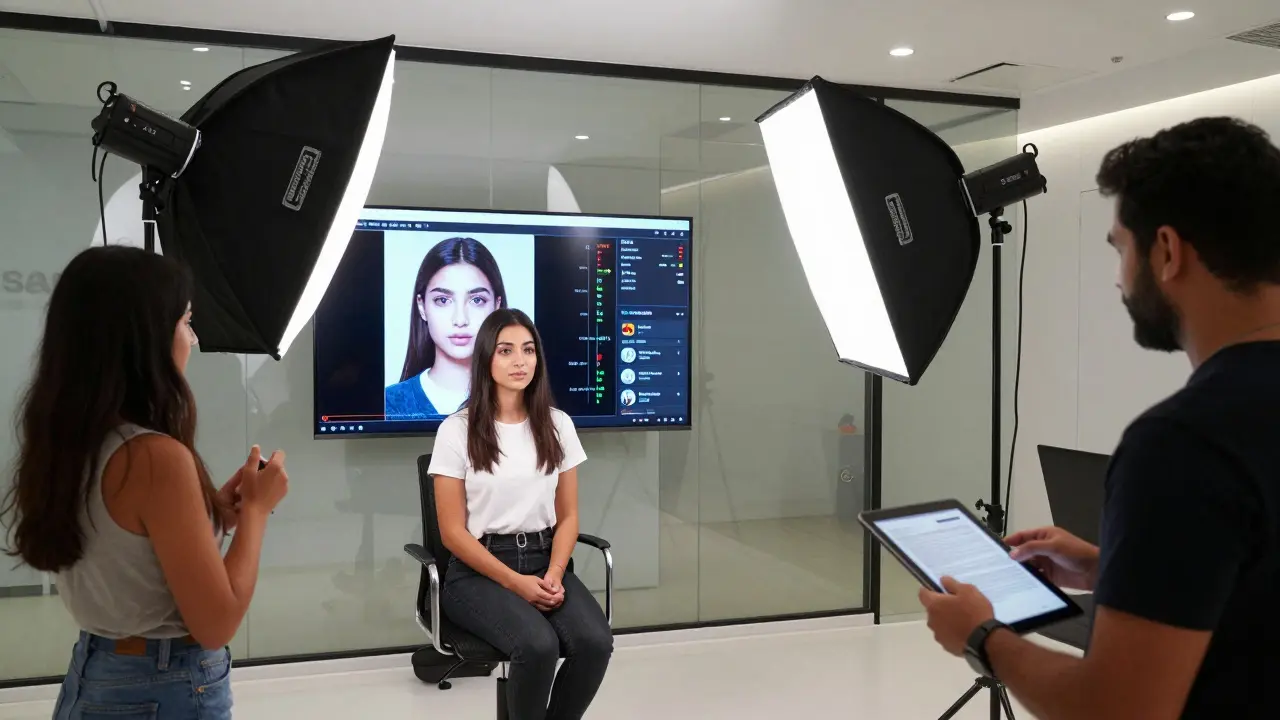
And AI? It’s changing casting. Agencies now use AI tools to analyze facial symmetry, body proportions, and even skin tone to match models with brand aesthetics. One agency told me they cut casting time by 60% using AI filters.
But here’s the twist: humans still win. People connect with real emotion. A virtual model can’t cry on cue. Can’t laugh naturally. Can’t adapt when the lighting changes. So the smart agencies? They’re using tech to find real talent - not replace it.
Challenges and Pitfalls
Let’s be honest. This industry isn’t easy.
Some agencies are scams. They promise fame, then ask for $500 to “enhance your profile.” Others pressure models to lose weight or change their look. There’s pressure to be “exotic” - to look more Middle Eastern, more European, more “international.”
And then there’s the visa issue. Most models on work visas can’t freelance. They’re tied to one agency. If they get dropped? They’re stuck.
But the good agencies? They’re changing. They now offer legal advice. Mental health support. Career coaching. Some even have partnerships with local universities for modeling courses.
Who’s Winning Right Now?
The most successful models in Dubai today aren’t the ones with the biggest Instagram. They’re the ones who treat modeling like a business.
They learn how to negotiate. They build personal brands. They start side hustles - styling, content creation, even small fashion lines. One model I know launched a sustainable swimwear brand after two years of modeling. Now she earns more from that than from shoots.
The future belongs to adaptable, smart, and professional models. Not just pretty faces.
What’s Next?
Dubai’s model agencies are evolving fast. By 2027, we’ll see:
- More local talent - Emirati models in global campaigns
- More inclusivity - Age, size, disability, gender identity
- More hybrid roles - Models who also create content, design, or manage social media
- More regulation - Government oversight to protect minors and prevent exploitation
This isn’t just about fashion. It’s about identity. Representation. Power.
If you’re considering this path - go in with eyes open. Do your research. Choose an agency that respects you. And remember: your value isn’t in your height or your face. It’s in your voice, your work ethic, and your vision.
| Agency | Specialty | Commission | Global Reach | Training Offered |
|---|---|---|---|---|
| IMG Models Dubai | High-fashion, runway | 20% | Yes - global clients | Yes - posing, media training |
| The Model Hub | Commercial, digital, social | 18% | Regional (GCC) | Yes - Instagram growth, branding |
| Dubai Models Collective | Inclusive, diverse, local talent | 15% | Local focus | Yes - legal advice, mental health |
Do I need to be a certain height to model in Dubai?
Not anymore. While runway models still need to be tall (178cm+ for women), commercial and digital modeling has opened up for all body types. Many agencies now actively seek models between 165cm-180cm. What matters more is your presence, personality, and how well you fit a brand’s image.
Can I model part-time while studying?
Yes - and many do. Most agencies allow part-time work, especially for students. But make sure your visa allows side income. Some student visas restrict freelance work. Always check with your agency and the UAE labor authority before signing anything.
How much can I earn as a new model in Dubai?
Beginners typically earn between AED 800 and AED 3,000 per shoot. Top-tier commercial jobs can pay up to AED 10,000. It depends on the brand, duration, and usage rights. Most models do 2-4 jobs a month early on. Earnings grow quickly with experience and exposure.
Are there age limits for modeling in Dubai?
No official limits. Agencies now sign models from age 14 (with parental consent) up to 60+. Maternity, senior, and plus-size modeling are growing fast. The industry is moving away from ageism - especially in Dubai, where diversity is a selling point.
Is it safe to work with a model agency in Dubai?
Yes - if you choose wisely. Stick to agencies with verifiable client lists and physical offices. Never pay to join. Ask for references. Check reviews on LinkedIn or local forums. The Dubai Economic Department now lists approved agencies. Always verify before signing.
Jennifer bomabebe
Dear esteemed contributors to this discourse, I must express my profound admiration for the meticulous articulation of the model agency ecosystem in Dubai; however, I am compelled to note a typographical inconsistency on page three: ‘L’Occitane’ is erroneously rendered without its acute accent-this oversight, though minute, undermines the scholarly rigor of the piece.
Furthermore, the statistical assertion regarding the 22% growth between 2022 and 2025 requires citation from a verifiable source-perhaps the UAE Fashion Council’s annual report? Without such anchoring, the argument risks appearing speculative.
I also observe that the table comparing agencies lacks footnotes regarding contractual obligations-this omission could mislead aspiring models who may not fully comprehend the implications of exclusivity clauses.
Moreover, the term ‘CGI influencer’-while technically accurate-may benefit from a brief glossary definition, given the global audience’s varying familiarity with digital personas.
Lastly, I urge the author to consider appending a bibliography. This is not merely pedantry-it is the cornerstone of intellectual integrity.
With the utmost respect,
Jennifer Bomabebe
Kristen O.
So like, the whole ‘tech-driven future’ thing? 🤯
AI casting tools are already eating traditional scouting. Like, agencies are using computer vision to analyze micro-expressions and gait symmetry? Wild.
And virtual models? Lil Miquela’s CPM is 3x higher than human models. Brands are shifting budgets hard. 💸
But here’s the kicker: human models who adapt are thriving. Think: hybrid roles-model + content creator + brand strategist. That’s the new KPI.
Also, did you know Dubai’s top 3 agencies now use blockchain for contract transparency? 👀
TL;DR: If you’re not building a personal brand + leveraging tech, you’re already obsolete. 🚀
Harshad Hisham
Good points. But don’t forget the human side. Many girls from small towns in India or Nigeria come to Dubai with dreams, not portfolios. They need mentors, not algorithms.
I’ve seen agencies use AI to filter out models with ‘non-standard’ features. That’s not progress. That’s bias in code.
Real change happens when agencies hire local coaches, not just software. Teach confidence. Teach negotiation. Teach self-worth.
Tech should help, not replace, humanity.
Lisa Nono
Okay but can we talk about how *beautiful* it is that Dubai is finally embracing maternity and aging models? I cried watching that ad for the Emirati skincare line with the 58-year-old woman in the desert-she looked like pure magic.
Also, the fact that child models are regulated? Huge. So many countries still treat them like props.
I’m just so proud of how far this industry has come. It’s not just about looks anymore. It’s about soul. And that’s worth more than any runway.
Bhatti Naishadh
Dubai is a Western puppet. They copy fashion, not create it.
India has been modeling for centuries. We have culture. You have filters.
Virtual models? Fake. AI? Fraud.
Real beauty is Indian skin, Indian grace, Indian truth.
Dubai is a mirage. We are the desert.
Bruce Monroe
Thank you for this comprehensive overview. The structure is logical, the data is current, and the tone remains professional without being sterile.
I’d like to add one nuance: the rise of hybrid roles isn’t just a trend-it’s a structural shift. The model as ‘content producer’ is now a core competency. Agencies that fail to integrate media training into their onboarding are already falling behind.
Also, the mention of blockchain for contracts is significant. It reduces fraud and increases trust-two elements historically lacking in this industry.
Well-researched and well-presented.
Pierce Burbank
Hey, if you’re thinking about modeling in Dubai-JUST DO IT. But do it right.
Build your portfolio. Get real photos. Don’t use filters. Post every Tuesday and Friday-consistency beats virality.
Go to open calls. Show up early. Dress like a professional-not like you’re going to a party.
And never, ever pay to join. If they ask for money, run. Run fast.
You’ve got this. I believe in you.
Janet Rohrer
They’re lying.
The ‘growth’ numbers? Fabricated. The ‘inclusive’ agencies? They’re fronting for data harvesting.
Every model’s face, skin tone, gait, and even blink rate is being recorded, analyzed, and sold to facial recognition firms.
Dubai isn’t building a fashion future-it’s building a biometric database.
And the ‘AI casting tools’? They’re trained on Western beauty standards disguised as ‘global.’
They want you to think you’re empowered. You’re not. You’re a data point.
Check your visa status. Check your privacy settings. They’re watching.